Disarmament Times: January 2026

The Israel-Iran Conflict: The Urgent Need to Return to Diplomacy and Law
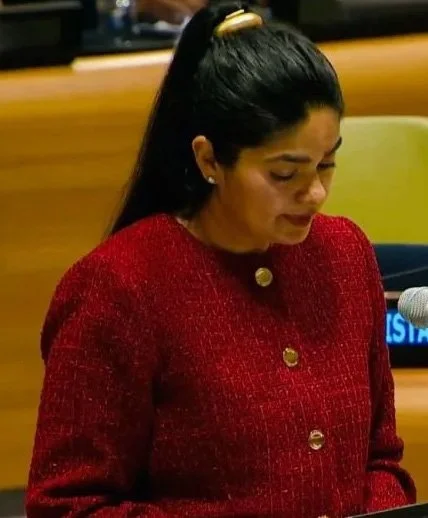
by Deepshikha Kumari
The eruption of hostilities between Israel and Iran last summer thrust the global nuclear non-proliferation regime into a perilous moment. Israeli airstrikes on Iranian nuclear …
Resolving the Israeli/Palestinian Conflict: A Symposium
Analyzing an ongoing conflict is a difficult task. On May 25, 2025, a panel of four women, each with a background related to the region under discussion, undertook the challenge of addressing the question: What will it take to achieve a lasting and just Israeli/Palestinian peace?
“EDITOR’S NOTE: Barbara Taft, a panelist in this symposium, was also the guest editor of this issue of Disarmament Times”
Resolving the Israeli/Palestinian Conflict:
A Symposium
Analyzing an ongoing conflict is a difficult task. On May 25, 2025, a panel of four women, each with a background related to the region under discussion, undertook the challenge of addressing the question: What will it take to achieve a lasting and just Israeli/Palestinian peace? The panel was a portion of a conference sponsored by the International Psychohistorical Association and was held online. (Go to https://psychohistory.us/programs-and-videos-from-previous-conferences/ for information about the conference and how to access video recordings of the sessions). The four panelists were tasked with discovering answers to the question addressed in the topic while the conflict in the region was at perhaps its most intense, with daily battles going on in Gaza, and with no end in sight. Each panelist spoke based on her own expertise, both from an academic and a personal perspective.
Throughout the presentation, reference was made to published works by each panelist on the area in question, as well as personal experiences each had had over the years. Despite the variety of written works and personal accounts, there were a few areas in which the panelists found a great deal of common ground. Brief bios of the panelists and the moderator are as follows.
Sharon Dolev is a peace and human rights activist focusing on eliminating weapons of mass destruction from the Middle East. She does this through innovations in education, advocacy and activism to change public policies. She is the founder and director of the Israeli Disarmament Movement and a co-founder and executive director of the Middle East Treaty Organization. Ms. Dolev also worked for the International Campaign to Abolish Nuclear Weapons (ICAN), which won the Nobel Peace Prize in 2017. Her full bio is available at https://en.wikipedia.org/wiki/Sharon_Dolev and she can be reached at sharon.dolev@gmail.com
Claudia De Martino, Ph.D. is a research fellow at the C2DH of the University of Luxembourg, former research associate at the CORIS Department of La Sapienza University, and a Professor of History and Philosophy at a public high school in Rome. She previously worked at several universities, including University of Naples; in a network of Mediterranean universities (UNIMED); and as a teaching assistant and Chair of European and Mediterranean History at the University of Roma Tre. Dr. De Martino is the author of three books on Israel. Her full bio is available at https://www.resetdoc.org/contributor/claudia-de-martino/ and she can be reached at claudia.demartino@uni.lu
Panelist and Disarmament Times Guest Editor Barbara Taft, MA is a peace activist who has visited the Middle East ten times from 1967 to 2009, mostly with peace delegation/study tour groups, interviewing Arab, Jewish and international experts. She holds a master's degree in Political Science and bachelor's in Journalism and Penology. Since the 1960s, Ms. Taft has served on the leadership team of US Women's International League for Peace and Freedom’s (WILPF) Middle East Peace and Justice Action Committee. Her full bio is available at https://ngodisarm.org/there-were-no-guns-in-palestine/Blog%20Post%20Title%20One-6y2sp and she can be reached at beejayssite@yahoo.com
Inna Rozentsvit, MD, PhD, MBA, MSciEd is a physician-neurologist and neurorehabilitation specialist trained in psychoanalysis and psychotherapy with extensive experience in brain injury, autoimmune neurological and neuropsychiatric conditions and rehabilitation. Dr. Rozentsvit is the Programs Director at the Object Relations Institute for Psychotherapy and Psychoanalysis; Associate Editor of Clio’s Psyche; and Associate Director of the Psychohistory Forum. Her full bio is available at https://psychohistoryforum.com/about-us/ and she can be reached at inna.rozentsvit@gmail.com
Panel moderator Brian D’Agostino, Ph.D. is Editor of Disarmament Times and a past president of the International Psychohistorical Association. He holds a Ph.D. in Political Science from Columbia University and has published peer-reviewed research on the psychology of militarism. Dr. D’Agostino is the author of The Middle Class Fights Back: How Progressive Movements Can Restore Democracy in America (Praeger 2012) and numerous scholarly articles. Visit his website at https://bdagostino.com/ and write to him at bdagostino2687@gmail.com
The panel was split into two sections, so moderator Brian D'Agostino introduced the first two panelists, Sharon Dolev, and Claudia DiMartino. He called on Ms. Dolev to begin.
Sharon Dolev began by indicating that there has been "so much suffering," and that in order to stop it, something should have been done much sooner. She stated, "There's not much we can do now," adding that "we should have ended it". Stating that Netanyahu is "a deranged man," she indicated that we need to make sure he's not there in the future and that he has no power. She went on to say that this particular conflict, like many others throughout the region, is influenced by armed state and non-state actors, describing the participation of other regional actors (the U.S. and Europe) as exercising undue influence that has prolonged the suffering.
She contended that a significant number of Israelis want to stop this war and asked what we can do to see that something like this doesn't repeat. She asked the audience if they believed peace is possible. Very few indicated that they believed it is. She continued to explain that if we believe it is possible, that can make it happen; but it becomes impossible if everyone believes it is impossible.
Dolev compared this current conflict to work in which she has been involved for several years, which is the attempt being made to create a Weapons of Mass Destruction Free Zone in the Middle East. Although she has been an activist since 1984, she has more recently shifted her emphasis to nuclear disarmament, working with a group of other activists to create an "impossible draft treaty" calling for such a nuclear-free zone. She indicated that every country in the region said they wanted such a treaty but never agreed to have it. This indicated that, although they said they wanted it, they actually didn't. She believes the same mindset is contributing to the lack of any action toward peace in this current conflict.
She continued by saying that Westerners look at the Middle East in "a flat way," in which they don't believe peace is possible. But the choice is between peace and annihilation. Peace, she insisted, is inevitable. She guided the audience through some reasons why she believes that people have created narratives about the conflict which are stories we tell ourselves about the history of the region. We seem to forget that some attempts to make peace have worked. To do a better analysis of history (and the current situation), it's necessary to look at the obstacles to peace in a strategic way, finding a solution to each obstacle.
Continuing with a brief discussion of Hamas, she informed her listeners that a strong Hamas in Gaza is bad for the Israelis but has been worse for the Palestinians. She brought up the fact that Netanyahu had strengthened Hamas by paying money coming from Qatar to Hamas [as a way to keep up a competition between Hamas and the Palestine Authority--ed.] She mentioned that the failure of the Israeli press to show photos of Ariel Sharon shaking hands with Palestine Authority President Mahmoud Abbas when Israel "evacuated" its settlements in Gaza left the impression that it was a Hamas victory, when it was in fact a victory for the PA (or the PLO).
She went on to praise the Arab Peace Initiative, which is a short document endorsed by the Arab League in 2002 and in two later summits. It calls for the settlement of three issues: Land/Borders, Refugees, and the Status of Jerusalem. It was presented by the Arab League, but Israel never acknowledged the proposed plan, and the Arab League never promoted it.
She returned to the contention that outside actors are in control, saying it's important to look at the major powers. She also indicated that a strong campaign is needed in Israel to show the benefits to Israel of achieving peace. She mentioned that the same is true of other regional conflicts. She added that too much energy is put into "divide and conquer". She indicated that a new plan is being developed to apply the Arab Peace Initiative, stating that all of the areas it emphasizes have been agreed to over the years "one way or another".
The second panelist was Claudia De Martino. She began by agreeing with most of what Sharon Dolev had said, stressing that it was important to engage those members of Israeli society interested in dialogue. In recognition of the shortcomings of the current government of Israel, she called for targeted sanctions against Israeli settlers and government officials responsible for the current ongoing conflict. Like Dolev, De Martino noted that Palestinians have not been included in most of the discussions, both in regard to the current conflict in Gaza and previously in such agreements as the Abraham Accords. She noted that the PLO ought to take a more important role, as one way of including the Palestinians. At present, she contends, there is no voice expressing the Palestinian perspective.
Moving ahead, she called for re-establishing Jerusalem as a city where all of the Abrahamic religions could live peacefully. She noted the difficulty of implementing this, stressing the contention that many Israelis are trying to avoid contact with Palestinians. She based this contention on a feeling that Israelis are still dealing with the trauma of October 7, and that few recognize--or want to recognize--the role and responsibility that Israel may have had for those events. She called for more dialogue with the international community as well.
De Martino cautioned her listeners not to "put everybody in the same basket," since not all Israelis are responsible for the current situation. She described the ongoing conflict in the Gaza Strip as "a terrible war with dramatic consequences". She noted the rift amongst the Israelis themselves, involving a camp that is working for peace and looking for a constructive way of getting out and moving away from the Gaza war as contrasted with the part of Israeli society that is exploiting the current conflict in Gaza to advance their own projects, such as the "settlement enterprise". She commented that the international community – and particularly the European Union, which is a major trade partner of Israel – should have taken it as their role to advance sanctions on the Israeli settlers, as well as the Israeli government itself, noting that certain representatives and ministries in the Israeli government who support this second group are keeping the conflict going so as to continue the bloodshed. She indicated that stopping that bloodshed might have been possible had the international community imposed severe sanctions.
She also pointed out that Sharon Dolev's paper referred to the Partition Plan, which Israel agreed to at the time of the creation of Israel, but the Palestinians (and other Arabs) did not accept. [Editor's note: The plan gave the majority of the land previously owned by Palestinians to the new state of Israel. That land was considered to be the most fertile, while the portion that was to be allocated to the Palestinians was more mountainous and lacking in good soil and adequate water, with much of it being rocky ground.] The rejection, Dr. De Martino noted, was the response of the Arab states, and not the Palestinians, who were really not represented at that time as an autonomous group. She put forth an argument that there was no real Palestinian movement (and perhaps no Palestinian identity) at the time the State of Israel was created.
In an attempt to put this into context, she referred to the current conflict as repetition of past mistakes, since the Palestinian people were again not being included in the determination of their own future. She pointed out that a regional approach is being attempted now, noting that the Abraham Accords included several Arab states, but that the Palestinians were again marginalized. She said that, without a "Palestinian chapter" to the Accords, they were not going to be successful. On their own, without the Palestinian input, the Palestinian/Israeli conflict would not be resolved. Throughout her segment of the panel, she contended that the conflict was at the root of all the many conflicts throughout the region. She advocated the PLO as being the proper representative of the Palestinian people, noting that the Palestinian Authority was no longer a real representative, and asserting that Hamas should not have any place as the Palestinian representative. She explained that the PA is seen as a subcontractor for the Israeli security apparatus, and not helping the Palestinians. She called for a broader representation of the Palestinian community. She advocated for a regional approach, as long as the Palestinians were included.
She then touched on UNRWA (the United Nations Relief and Works Agency for Palestinian refugees). Her feeling was that this agency shouldn't exist anymore at all, noting that it extended refugee status not only to the original refugees, but also to their descendants up to the sixth generation. She noted that all the other refugees in the world were represented by the UNHCR--United Nations High Commissioner for Refugees--while there is a special UN agency for the Palestinians. She felt that was unfair and likely to have fed a desire for revenge and the expectation that the conflict will be resolved without considering the facts created on the ground of the past seventy years. She linked this to the fear that she acknowledged many Israelis had, based on the idea that if all Palestinian refugees were able to exercise their right of return, they would easily overwhelm the State of Israel.
As she wrapped up, De Martino talked about one final inequality between the Israelis and the Palestinians. She said the Palestinians should be entitled to the same level of security as the Israelis. She noted they should have access to their land resources, their own borders, as well as their own educational facilities and the same level of protection in terms of security (not being searched in their homes at night with impunity). With those rights, she contended, a peace process might have a chance to succeed.
Once the first two speakers had completed their talks, the floor was opened for questions and comments. This portion brought up a few ideas that hadn't been covered by the speakers.
First was a suggestion to re-establish Jerusalem as a holy city, not only for Jews, Christians, and Muslims, but for all religions of the world. In addition, it was suggested that the final decision-makers in regard to the status of the region should be the Palestinians and the Israelis on the ground, as they are the ones who will have to live with whatever solution is finally decided.
It was mentioned that not all Jews in the world support the State of Israel. The Neturei Karta movement, which believes that Israel cannot exist until the coming of the Messiah (an event which they do not believe has happened) is one example. Barbara Taft directed the audience to the booklet she co-edited for Women's International League for Peace and Freedom ["Hamas at the Peace Table: Why?"] In that booklet, the authors contend that any party (in this case Hamas) that is left out of peace negotiations will contend that their voice has not been included, and that the agreement reached by others doesn't represent them. As predicted in the booklet, without their inclusion, Hamas struck out on their own in on October 7, 2023.
One comment made in the discussion was that the Abraham Accords are not a peace agreement, and that they exclude Palestinians. There was speculation about what type of agreement might be the end result: one with new borders, etc. And the two-state solution might not be the final result.
Additional comments were made by Sharon Dolev in regard to UNRWA. She said that that agency was both political and corrupt, and said that the agency was not good from the start.
Another comment was that Jerusalem is a divided city, and that this is true not only of the Old City, but of all of Jerusalem. A solution for this needs to include both the Palestinians and the Israeli settlers. Claudia De Martino stressed the importance of finding common ground, being realistic, and holding direct talks. The parties aren't really meeting now, she said. She talked about the role of the Christian Zionist community, their belief in the "Rapture," etc. She said that a creative solution is needed, and that it would need to do away with the Israeli preoccupation with the right of return for Palestinians.
It was also mentioned in the discussion that peace is possible, but the parties will need to deal with the loss of trust as a result of October 7. There will also need to be guarantees against terror. And, it was mentioned, UNRWA has an importance for Palestinians’ children, as that agency has run schools and clinics. In the end, two major obstacles to achieving peace are the loss of trust and the need for guarantees against terror.
Sharon Dolev spoke of the possibility of one single state, saying that it is impossible now, as it would look like an apartheid state. She indicated that the Israelis and the Palestinians will need to heal separately and to reach a point where they can look at one another as equals. Once that occurs, other solutions might include a confederation or perhaps a single state. But this can only happen once trust has been built.
Adding to this final concept, Claudia De Martino indicated that Palestinians are currently being defined by others, but it is important for them to be able to define themselves, including deciding who is included in the term "Palestinian".
The second part of the panel, featuring two additional speakers, began after a break. Brian D'Agostino introduced the two remaining speakers, Barbara Taft [your guest editor for this edition] and Inna Rozentsvit, suggesting the audience read each one's bio. Since I was the first speaker in this second portion, I ask for your indulgence as I will be using the first person to describe my part of the panel. I had been asked to present information relating to the Palestinian viewpoint on current events in Gaza.
I began by noting that I am older than the modern State of Israel. I also spoke of my first knowledge of the Palestinian people. That was when I was only two or three years old. My father was watching the news on our old black and white TV. I saw people carrying furniture, as well as women and children, on their backs. They were headed toward a river. They suddenly turned and I could see horrified images on their faces--something that has never left my mind since then. I was frightened. My father (who was brought up as an Orthodox Jew) said, "Those poor Palestinians". I didn't know who "those poor Palestinians" were, and it wasn't until many years later that I saw the end of the newsreel that had left me traumatized. As part of an Arab cultural night at my university, the newsreel was shown, but it went further than what I had seen on television as a toddler. The people had the horrified looks on their faces as they turned to see homes being blown up behind them. They knew that some of their families and friends had chosen to stay behind, and that they were likely killed in these explosions.
I noted that seeing these people was traumatic for me, but it had to be much more traumatic for the people who were living through it. And I then commented that I had recently seen a child being rescued from the rubble of a collapsed building in Gaza, and that this was yet another example of a traumatic experience. I added that a man I know in the Greater Phoenix area where I currently live had told me that he had lost 44 of his relatives in one day when two apartment buildings in Gaza collapsed as a result of Israeli bombings. There are many more examples of traumas being experienced as a result of the ongoing fighting there. [Here in the U.S., we are more likely to see and hear of the traumatic experiences of Israelis on and after October 7th, and almost never the traumatic experiences of Palestinians living in Gaza or the West Bank.]
I pointed out that the reaction to these experiences was an example of the "othering" of the people of Gaza, wherein all Gazans are referred to as being with Hamas. But the majority of Gazans were not responsible for the actions of October 7, 2023 and in fact, even Hamas as a whole did not support the atrocities. Those actions were led by the Izzadine al Kassim Brigades, which some refer to as the military branch of Hamas. What Izzadine al Kassim did was not sponsored by the political leaders of Hamas, and in fact, they were quite critical of the atrocities. As far as what the general population of Gaza thought about those actions, there was a full spectrum of opinion among the people. There was no universal opinion expressed. And, prior to October 7th, polls had shown that only a small percentage of Gazans were still in support of the Hamas-led government there.
Once that was said, I moved on to the question of what could be done to move toward a solution to this conflict. The first step in this process, I suggested, would be to humanize (or re-humanize) the "other". This needs to take into account that the parents and grandparents of the current population of Gaza had experienced the Nakba [the Arabic word for catastrophe, which refers to the events of 1948, in which approximately 750,000 Palestinians lost their homes and lands upon the creation of the State of Israel]. Many of these people were becoming the victims of a similar catastrophe now. At this time, there are upwards of 10,000 children who have become orphans due to the fighting, as well as many children who have become amputees [often done without the benefit of anesthesia]. I suggested that the audience should read two books, one by a Palestinian author and the other by an Israeli one, that recount the events of 1948. I pointed out that there were many horrors occurring during the current war on Gaza, mentioning the burning alive of whole families, as well as the targeting of journalists, health care, and humanitarian workers. Many of those arrested by Israel are subjected to Administrative Detention, which is arrest and captivity without trial, usually for six months, but renewable repeatedly. Such arrests have been going on for years.
I addressed a question that had been brought up in an earlier discussion about the article I wrote last year for this publication. It had been asserted that Palestinian schools teach hatred in their classrooms. I stated that I have been in those schools and that hatred is not a part of the curriculum. The children instead form their opinions of the Israelis when they are confronted at checkpoints on their way to school, where the Israeli soldiers prevent them from passing and aim their guns at these school-aged children. I noted that surveys of Palestinians indicate that they only see Israelis during confrontations. Palestinian children are not "taught to hate". Instead, their opinions are formed because of their personal experiences.
Linked to this, I pointed out that both Israelis and Palestinians are Semitic peoples, and that Palestinians often refer to Israelis as their "cousins". To illustrate this, I told of an interview that occurred on one of my visits to Jerusalem. That was in 1983, and the Israeli journalist who was speaking had been among a group of journalists who went into the Sabra and Shatila refugee camps after the massacres there. He said he was in one camp home, where he entered the kitchen and saw a dead toddler on the floor in a pool of blood. He looked at the child and noted that he resembled his own son. Again, this was traumatic for the journalist, and it illustrates the fact that both Palestinians and Israelis look similar, mainly due to their common Semitic roots.
Tying this together, I explained that each side views the other as not being human. This comes about as a result of the propaganda that is put out by each side, as well as what they have seen with their own eyes. It is one of the things that allows, and even encourages, one side to treat the other side badly. The less concerned they are about the humanity of the other, the easier it becomes to treat them badly.
Demonizing the other is not helpful to healing, which is what will be needed once the current conflict ends. I mentioned that my Master's thesis in Political Science/International Relations was entitled "Nationalism, Legitimacy and Sovereignty: The Case for Palestinian Statehood." In that thesis, my main three points were that each group, Israelis and Palestinians, believed that they were a "nation," and that each adhered to its own nationalism, that neither believed that the other would be able to legitimately rule over them, and that they each needed to have their own sovereign nation. I believed very strongly that a two-state solution was the best way to resolve the conflict. [But over the years, the land which would have become the Palestinian state has experienced encroachment from Israel, mostly in terms of settlement-building and also from Israel declaring certain areas "closed military zones". It has become virtually impossible for the Palestinians to form a contiguous state.]
Prior to October 7, a debate had been ongoing among Palestinians as to whether a single democratic state or a two-state solution would be best. I introduced the audience to two Palestinian Christian brothers I have known for a long time, Jonathan and Daoud Kuttab. Jonathan is an attorney, while Daoud is a journalist. Each of them has written a book regarding what they believe to be the best solution to the Palestinian/Israeli conflict. Jonathan believes there should be a single democratic state, while Daoud is convinced that there should be a two-state solution. The two-state solution is the most widely suggested by other nations, including the U.S. But I contend that the only people who should make the final determination of the status of the region should be those who have to live with that decision.
No matter what solution is chosen, it is vitally important to re-humanize the other. At the present time, there is scant dialogue going on between the parties. In the solution to conflict, it is necessary for the parties to talk with one another directly. As the situation is in a constant state of flux, the use of interlocutors has become necessary, even though it has often led to additional problems. I noted that, in 1991, the group I was with was meeting in Jerusalem with Saeb Erakat, a Palestinian politician and diplomat, when we were advised to leave the meeting to watch something on television. It happened to be the fall of the Soviet Union. Our group consisted of Americans, and most cheered this news. But Saeb brought us back to the reality that this was terrible for the Palestinians. When there were two superpowers (the U.S. and the U.S.S.R.) each side had an advocate on their behalf. The U.S. could be relied upon to support Israel, while the Soviet Union provided a counterforce by taking the side of the Palestinians. Now, the Palestinians had no major support.
But I reiterated that other nations should not be the ones deciding the future of the two peoples. The parties themselves need to be in direct discussions, which means listening--really listening--to the other side. The opinions of each are based on what they have personally experienced, what they had been told, and other points that outside forces could likely not understand. Discussions should be based on the collective memories of each side.
I added that Palestinians and other Arabs had often indicated to me that they understood and were sympathetic to the Israelis and what had happened during the Holocaust. This was evident when I was in Jerusalem during the lead-up to the Madrid round of peace talks. The participants in those talks were intent on hearing the viewpoints of the other side. And besides their own ideas, they had the benefit of Arab and other peace proposals that had been under discussion for some time.
During today's crisis, Gazans are aware that Israeli soldiers have been killed, that others have returned home with conflicting emotions due to what they had seen and done, and that some had even committed suicide. There is at least the seed of understanding on each side. And there are numerous organizations trying to work toward peace. Included groups are Combatants for Peace, the Parents Circle, Musalaha (Reconciliation), and several others. Each of these groups consists of representatives of both sides, trying to work together to achieve a level of agreement that the fighting must end.
I mentioned an idea which I first heard in 1983 in Haifa. An Israeli man named Joseph Abileah headed up The Society for Middle East Confederation. He believed that the Palestinians should join with one of the "confrontation states" (most likely Jordan) in economic confederation, and that this cooperation should involve having business dealings with the Israelis. He believed this was necessary because the Israelis had a more advanced economy. While having economic relations with one another, the parties would begin to recognize the humanity of the other side. It might take years, but once enough time had passed, he said the Israelis and the Palestinians should be allowed to vote on what type of relationship they wanted: a single state, a two-state solution, or a continued confederation. This sort of idea has recently been revived.
I closed with two quotations. The first was from my friend, Raymonda Tawil, a journalist probably best known as Yasser Arafat's mother-in-law. When I first met Raymonda, she said that it was amazing to her "how soon the oppressed can become the oppressor". My hope is that there won't be another round of the oppressed and the oppressors.
The second quote was much more hopeful. My late friend Karim Khalaf, after having been bombed by members of the Israeli Terror Underground while he was mayor of the West Bank city of Ramallah, and despite being severely injured, continued to tell groups with whom he met that "When peace comes, it won't just be peace for the Arabs, or peace for the Jews; it will be peace for everyone." That's what we all need to work to achieve.
The fourth and last speaker on the panel, Inna Rozentsvit, began by telling everyone that she is a psychohistorian, and that she approached the subject through that viewpoint. She commented that my January 2024 Disarmament Times article “There Were No Guns in Palestine” and the presentation that I had just given on this panel were from a very personal perspective, and that she appreciated that.
She went on to tell us that her family had experienced pogroms in Ukraine and that she herself had encountered virulent anti-Semitism in Moldava during the Soviet years, where she had lived and attended university. She shared her slides as a part of her presentation. To start, she stated that October 7 was not resistance; it was a pogrom. Then she told us that "we need heart-to-heart communication and a dialogue.” She also spoke of the problems of "blaming the victim and distorting the truth".
Rozensvit then went on to say that the Hamas Charter of 1988 openly calls for Israel's destruction, adding that PLO terrorism existed long before Oslo. She then talked about the 1947-48 civil war, saying that it included armed attacks on Jewish convoys, and that this took place well before Israeli statehood. She said that my article overlooks the PLO role in international terror, including airplane hijackings, school massacres, and the killing of athletes at the Munich Olympics.
Moving on to the present day, she stated that Hamas is not simply a political party. She added that, when civilians are killed in Israel, the Israeli counterattacks are not a pogrom but are a tragic result of Hamas using their own people as shields. She indicated that "using appropriate force to achieve legitimate military objectives" should not be construed as disproportionality under international law. She stated that, "when a nation is attacked by terrorists who butcher civilians, the obligation is to protect people and not calibrate its defense by public opinion."
She described Hamas as having its ideological roots in the 1930s -1940s when the Grand Mufti of Jerusalem allied with the Nazis, interpreting Islam as violently and inherently anti-Semitic. She reminded the audience that the Nazis published Mein Kampf translated into Arabic (which included removal of the Nazi negative view of Arabs and Muslims). At that point, both the Nazis and the Islamists shared "a loathing for Jews".
Continuing, she recounted that Hamas was formed out of the Muslim Brotherhood, and that Hamas carried this legacy forward. She cited the notion that October 7 was not a surprise, as it was a fulfillment of an ideology that Hamas has never hidden. The Hamas Charter is based on anti-Semitism and anti-Zionism, and calls for Israel's destruction and the obliteration of the Jews, as others had tried before.
Rozentsvit moved on to mention the Nakba, the Arabic word for catastrophe. She stated that, in 1948, five Arab states launched a war on the newly declared Israeli state. She stated that it was a war that the Jewish state did not initiate. Some Arabs fled, she said, while others stayed behind and became citizens of Israel. She indicated that the Arabs expected to return when the Jews were wiped out. This is what their leaders had told them. At the same time, she said, 850,000 Jews were forcibly expelled from Arab countries, where entire communities vanished. They came to Israel and were absorbed. They were not called refugees. She stated that Palestinians who fled to other Arab nations were not absorbed into those states, but were referred to as refugees, and still are today.
She attempted to explain why anti-Semitism exists today. At this point, she said that the Nakba is a self-imposed shame and blame for losing to the Jews. That's why October 7 was important, because now they won over the Jews. She then described a case where some Muslim states have criminalized the behavior of Arabs who deny the Nakba. She couldn't recall which state(s) that applied to, but stated, "If you're an Arab person and you deny the Nakba (this self-imposed shame and blame of losing to Jews) then you go to jail.”
Most anti-Jewish pogroms are forgotten, but "historical truth requires that we reconstruct this history.” She stated that only one side has sought peace and absorption for refugees. She went on to say that it is essential to challenge the idea that Israel is an apartheid state, indicating that over 20% of Israeli citizens are Arabs, Muslims, Christians or Druze. They vote, serve in the Knesset, sit on the Supreme Court.
She asked, "Are there tensions? Yes, of course there are, as everywhere. But integration exists.” In contrast, she said, "the P.A.'s educational materials still teach that Jews have no right to exist."
Next, she said that Zionism is treated as a dirty word. It is, she added, simply the belief that Jews, like any other people, have the right of self-determination in their ancestral land. Why is this controversial, she asked. Why is the Jewish story of return, survival, and resilience seen as a problem to be solved rather than a human right to protect?
"We must also look at why anti-Semitism persists, especially in a new form," she said. Prejudice entails projection. It is a group narcissism turned to rage when faced with people who survived and succeeded. Jews are accused of being too powerful, or too weak; globalist or tribalist; capitalist or communist. "We're always too something," she added, "which tells us that it isn't about you; it is about anxiety from others about you."
In closing, Inna stated, "I'm not here to deny Palestinian suffering. I'm here to request an honest conversation, one that doesn't place this conflict into oppressor and oppressed." There is trauma on both sides, but peace begins when we can say the murder of Jews is not liberation. That's the beginning. The denial of Jewish indigeneity is not resistance. And the future will not be built on a foundation of historical distortion. We have to be honest on what history is and was."
Yes, she said, there were terrorists on both sides before the British Mandate was dissolved. That's history, too. She closed by saying, "Let us move forward with clarity, courage, commitment, and truth. Only then can we have a dialogue. And this is what I'm for."
39999
The panelists were each offered a chance to comment on the other speaker's talk. I [Barbara] said that the Hamas Charter was declared null and void many years ago. I added that, obviously, there is a difference in points of view. Each side considers itself to be the victim and the other side to be the offender/oppressor. There needs to be something to come between these two extremes. It's important to get to know the other, to understand how they think, what's important to them, and to say, "Oh wow! These people are human beings. They have similar ideas to my own." Until that happens, peace will be very difficult to achieve.
Rozentsvit stated in her final comments that the Russian Federation is supporting Palestinians now. And each side brings its own history to its perceptions of the inter-group situation.
Sharon Dolev is a peace and human rights activist focusing on eliminating weapons of mass destruction from the Middle East. She does this through innovations in education, advocacy and activism to change public policies. She is the founder and director of the Israeli Disarmament Movement (IDM) and a co-founder and executive director of the Middle East Treaty Organization (METO). She also worked for a time with the International Campaign to Abolish Nuclear Weapons (ICAN), which won the Nobel Peace Prize in 2017. Sharon Dolev can be reached at sharon.dolev@gmail.com

Claudia De Martino, Ph.D. is a research fellow at the C2DH of the University of Luxembourg, former research associate at the CORIS Department of La Sapienza University, and a Professor of History and Philosophy at a public high school in Rome. She previously worked at several universities, including University of Naples; in a network of Mediterranean universities (UNIMED); and as a teaching assistant and Chair of European and Mediterranean History at the University of Roma Tre. Dr. De Martino is the author of three books on Israel. Her full bio is available at https://www.resetdoc.org/contributor/claudia-de-martino/ and she can be reached at claudia.demartino@uni.lu
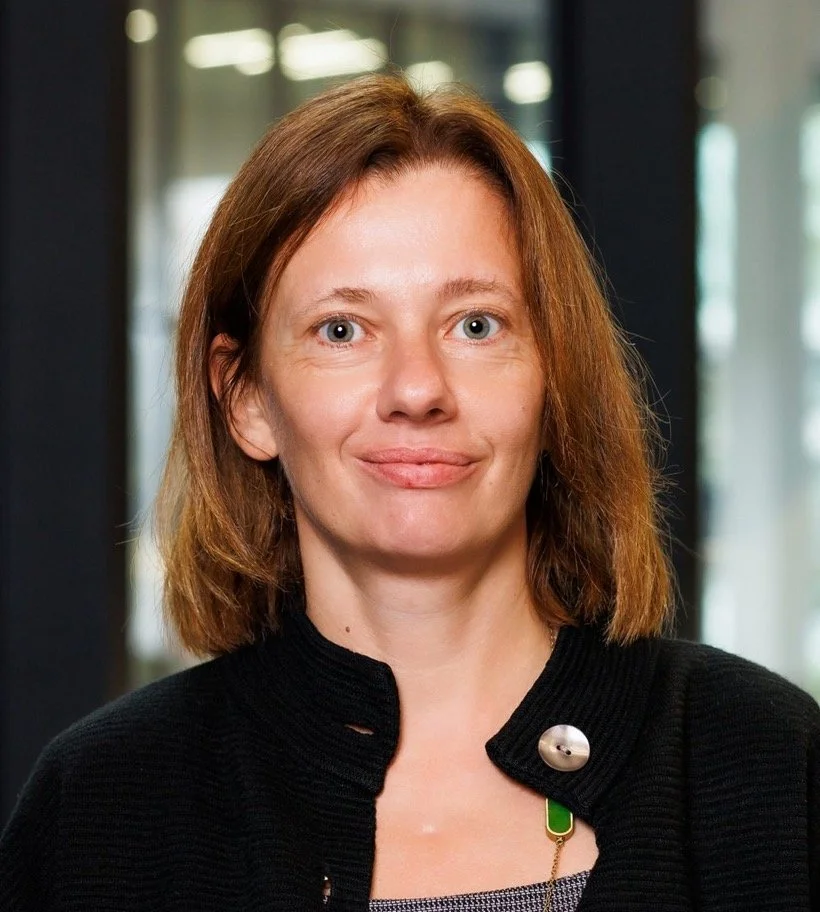
Barbara Taft, MA is a peace activist who has visited the Middle East ten times from 1967 to 2009, mostly with peace delegation/study tour groups, interviewing Arab, Jewish and international experts. She holds a master's degree in Political Science and bachelor's in Journalism and Penology. Since the 1960s, Ms. Taft has served on the leadership team of US Women's International League for Peace and Freedom’s (WILPF) Middle East Peace and Justice Action Committee. Her full bio is available at https://ngodisarm.org/there-were-no-guns-in-palestine/Blog%20Post%20Title%20One-6y2sp and she can be reached at beejayssite@yahoo.com

Inna Rozentsvit, MD, PhD, MBA, MSciEd is a physician-neurologist and neurorehabilitation specialist trained in psychoanalysis and psychotherapy with extensive experience in brain injury, autoimmune neurological and neuropsychiatric conditions and rehabilitation. Dr. Rozentsvit is the Programs Director at the Object Relations Institute for Psychotherapy and Psychoanalysis; Associate Editor of Clio’s Psyche; and Associate Director of the Psychohistory Forum. Her full bio is available at https://psychohistoryforum.com/about-us/ and she can be reached at inna.rozentsvit@gmail.com
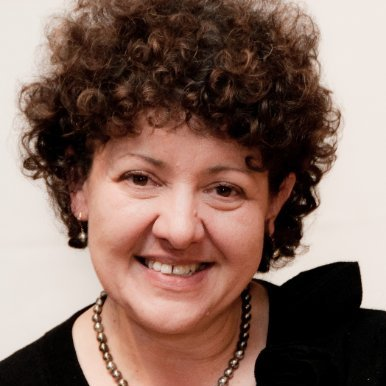
Brian D’Agostino, Ph.D. is Editor of Disarmament Times and a past president of the International Psychohistorical Association. He holds a Ph.D. in Political Science from Columbia University and has published peer-reviewed research on the psychology of militarism. Dr. D’Agostino is the author of The Middle Class Fights Back: How Progressive Movements Can Restore Democracy in America (Praeger 2012) and numerous scholarly articles. Visit his website at https://bdagostino.com/ and write to him at bdagostino2687@gmail.com

The Israel-Iran Conflict: The Urgent Need to Return to Diplomacy and Law
by Deepshikha Kumari
The eruption of hostilities between Israel and Iran last summer thrust the global nuclear non-proliferation regime into a perilous moment. Israeli airstrikes on Iranian nuclear …