Disarmament Times: September 2026
Environmental Damage: The Hidden Cost of War
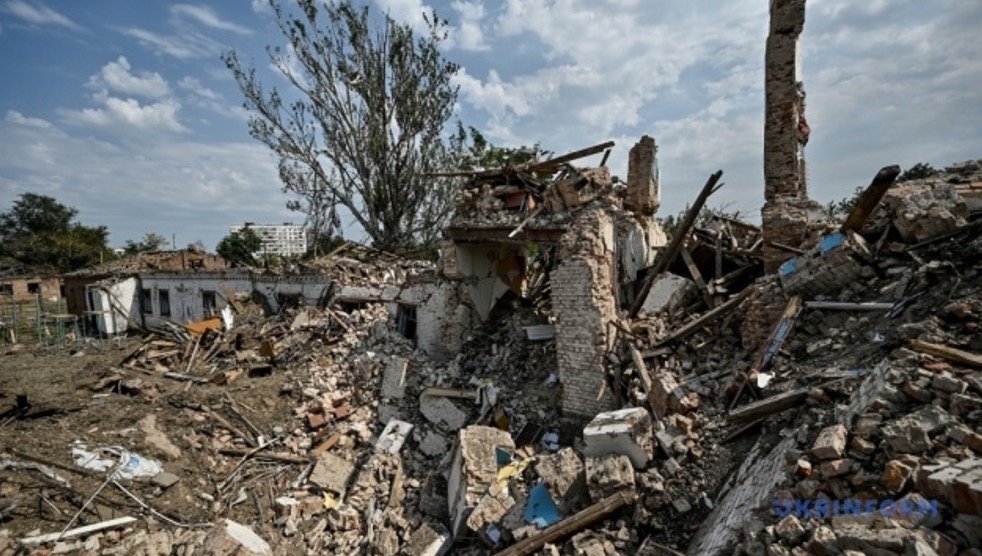
The destruction caused by war goes beyond what is readily visible to the eye.
1.
Introduction
by Barbara Taft
Most people tend to put the costs of war into convenient boxes: The cost of munitions; the death toll; …
2.
The military elephant in the climate room
by Nick Buxton
Two global news events have dominated the summer of 2026: the US-Israeli war on Iran and intense heatwaves in Europe and the eastern United States…
Introduction
by Barbara Taft
Most people tend to put the costs of war into convenient boxes: The cost of munitions; the death toll; casualties that lead to lifelong needs for care; buildings damaged or destroyed; Post-Traumatic Stress Disorder (PTSD); or psychological impairment that leads to violent behavior. But we often ignore other less obvious consequences of war. We do so at our own peril. This issue will deal with one often ignored after-effect of wars and conflicts, and others of these "hidden" consequences will be covered in later editions of Disarmament Times. The topic of this issue is War's Impact on The Environment.
Most of us are woefully ignorant of the severity of damage to the environment caused by war. Modern day warfare has more debilitating effects on the environment than conflicts in all of the world's past wars combined. And much of this "friendly-fire" type of unplanned result is simply not on our radar. We will delve into the unintended consequences that current wars include. And we will also examine how these attacks on the environment not only affect our world today, but will impact future generations.
As co-editor of Disarmament Times, I intend to inform you via this first article about several ways in which the environment is negatively impacted by war. Other writers will go into depth regarding the consequences for our generation, as well as future generations. I hope to set the scene and allow the experts in the field to further inform you. We will hear from one expert in this summer edition, with other experts chiming in for the winter edition, which will explore the relationship between war and global warming, as well as the moral arguments for preventing manmade catastrophes from creating an unlivable planet.
The first of these articles is written by Nick Buxton, who coordinates climate and militarism research at the Transnational Institute (www.tni.org). A more complete biography can be found above his article. That article discusses the climate dangers of this moment and why militarism threatens to tip us over the edge.
Nick Buxton's article presents updated information demonstrating how current technologies make the environment more endangered than it has been during past conflicts.
We can probably each think of at least a half dozen results of warfare that can be deemed negative consequences: Death, injuries, destruction of buildings, disruption of life, unexploded ordnance, economic ruin (of individuals/families, and whole societies, etc.)
But most of that which comes most readily to mind doesn't register as an environmental disaster. Some of us have memories of the utter destruction of towns that were fire-bombed in Europe during World War II, or of the utter destruction of Hiroshima and Nagasaki as a result of the U.S. dropping atomic bombs on them more than 80 years ago. We often note that even such major damage can be repaired, and that those places are thriving today.
We are likely to view these disasters in light of the location's apparent situation today. Cities in Europe and Japan have been rebuilt, although there are remnants of buildings that are left as monuments to past destruction. Even though Hiroshima and Nagasaki are thriving metropolises today, it is often forgotten that they stand on top of the remains of the fires and the bombings of the past.
Is it so easy to forget? Those past wars have left a legacy of contaminated soil, water, and air. Carry this to the next level, and think of the costs of cleanup, which include ongoing expenses to this day. Nuclear wars, for example, can be measured in terms of "half-life," a phrase that refers to the time required for a quantity to reduce to half of its initial value through decay. The result is supposed to be a different, more stable, nuclear species. But it's still nuclear waste. Do we want that sort of thing hanging around?
Although you may think it's not war-related, let's take the example of the Chernobyl disaster. This event occurred at a time and in a location where there was no active war taking place. But the site of the disaster was a location where instruments of war were being manufactured and stored. I had an opportunity in 1995 to visit with doctors and other medical personnel who had gone into the zone affected by this disaster. I was on board a Peace Train organized by Women's International League for Peace and Freedom (WILPF) which was traveling between Helsinki, Finland (site of that year's WILPF International Congress), and Beijing in preparation for the World Women's Conference to be held in China the following month. Along the way, we stopped to talk with women who would not be able to attend the Conference, visiting in several nations throughout Europe, and we carried their stories with us to the Conference. Some of the most moving stories were told to us by the doctors and other professionals we met with in Kiev.
We were told of children born without a brain stem, or with webbed feet or hands, and those with other physical disabilities who were condemned to a lifetime of medical care, or who would not live for very long. We were told of those, both children and adults, who would experience a lifetime of episodes of nausea and vomiting, of psychological trauma, and of musculoskeletal pain that would never go away. We were told that the air would remain contaminated for at least a century, and that small groups of children were being taken out by train to live for perhaps a month in a part of the world where the environment was more clean, in the hope that this temporary removal would allow some recovery of their lungs, and of their other physical and mental health. That is only part of what we were told.
Although this "disaster" occurred during peacetime, but definitely still the period known as the Cold War, the situation would not have occurred if the nations of the world were not preparing for the potential of war. It has been more than a quarter of a century since this event took place, but the area around Chernobyl is still restricted, since there remains a high level of contamination in the soil, water, and air. And those who continue to live in the contaminated area live daily with the knowledge that they could risk bearing babies with birth defects if they should choose to have children, and that their own life expectancy has been greatly diminished due to their exposure to the residue of the leaks and explosions that happened so long ago.
Each generation of weaponry that is developed seems to have greater potential to kill and to maim. And the distance between the source of the payload and its target has greatly increased. Many people note that it has become easier to kill in modern day wars because you are never coming face-to-face with your target. Once you are unable to see that you are destroying a human being, it is much easier to pull the trigger, drop the bomb, or push a button that destroys a faraway target. And there is little or no thought to the environment that is left behind for any survivors of that attack. This has led to what are now known as "forever wars," as well as an increase in the level of lethality of the weapons used.
If we examine this concept more closely, we can see that more lethal weapons do not only kill their human victims, but also the entire environment surrounding those flesh and blood targets. For example, if you kill a farmer in his field, his crops are also the recipients of the lethal projectiles. Let's examine how that works. In his work "All They Will Find is Sand," Eyal Weizman states, "Some bombs penetrate the ground before exploding and release heavy metals or metalloids-- such as uranium, lead and arsenic--deep underground. Many of these substances are slow to decay and will affect the composition of the soil for decades." (https://www.lrb.co.uk/the-paper/v.48/n07/eyal-weizman/all-they-will-find-is-sand/Vol.48, no.7-23 April2026).
We are prone to viewing the superficial effects in a circumstance like the attack upon a farmer in his field, such as that above. We might see the consequences as being no one to pick the crops, or to tend those crops until they ripen. Or we might note that the crops located in the vicinity of the attacks have been destroyed. If we follow this line of reasoning, we might note that those who relied upon his farming so that they could buy their vegetables at the market, and then could prepare and eat a meal, would suffer as a consequence of his death. Or we might think in terms of his wife and family, who would suffer from the loss of the breadwinner in their family. But our tendency is to ignore the far-reaching effects of such an incident, as outlined by Weizman above.
Furthermore, in a situation such as a war, we need to multiply such incidents, as well as others similar to them, and do so exponentially based on the number of such occurrences, the duration of the fighting, and the size of the area under attack. Rural settings are certainly destroyed, with similar environmental effects, but other consequences occur in urban settings as well.
In the same source listed above, Weizman (ibid.) notes, "When buildings are bombed or bulldozed, their remains--plastics, wiring, solvents, insulation, asbestos--release toxic chemicals into the soil."
Environmental Cleanup
For many years, especially during the l970s and early 1980s, the U.S. was delving into the question of environmental contamination, with efforts that were often referred to as "environmental cleanup". As a result, the Environmental Protection Agency became a major entity charged with protecting citizens from damage to the air, water, and soil from everyday human activity. One of the earmarks of this organization's activities was that all of the damage they were dealing with was caused during ordinary everyday life in a period of peaceful activity. The U.S. government felt such cleanup was essential despite the fact that there was no ongoing damage due to war.
That brings us to another aspect of environmental damage. Even without wars, the Earth is losing significant numbers of species every year. Some of this can be attributed to losses within the food chain. If a creature's source of sustenance dies off, it may not be able to find an alternate food source, and it might starve. Or the loss of a species could relate to the predator/prey relationship. There is an entire map of how that has played out throughout the world. A disruption at any point in the natural cycle of life for any species can lead to a short path toward extinction. Wars are a major cause of these disruptions. A good source for information regarding the ongoing extinctions of species is the National Geographic Society.
It is often not possible for those living in a war zone to document the damage being done to the environment around them as a result of that fighting. It is frequently a difficult task to report on the death of civilians (and members of the military) as a result of war, and significantly more difficult to discuss other losses. And when the fighting has ended, such environmental costs are rarely measured and/or publicized. One notable exception is the current disaster unfolding in the West Bank and the Gaza Strip. There is ample documentation of the impact on the environment of the region regularly posted by Dr. Mazin Qumsiyeh, who is the founder of the Palestinian Museum of Natural History, as well as of the Palestinian Institute of Biodiversity and Sustainability. Information regarding the many species of plants and animals which have suffered (or been annihilated) since the beginning of the war on Gaza can be found on several websites he maintains. One website is readily available by clicking here. Dr. Qumsiyeh's entities physically reside at Bethlehem University in the West Bank. His goal is to document the many species endemic to the region, to help preserve them, and to educate the public as to what has been lost. A few months ago, Dr. Qumsiyeh wrote, "...some areas of Gaza are now uninhabitable for decades to come." He refers readers to research papers which can be found here.
If we begin to research the toxicity of modern weaponry, and look at how it can disrupt the normal growing cycle of basic food crops, and then we extrapolate to whole orchards or vegetable fields within a war zone, we can see why so many of the world's peoples today are being forced to migrate. With their food supplies wiped out, they have little hope for a future in which they can provide food for their families. What they once called home is now a place of desolation. Surviving a war doesn't necessarily mean that one can enjoy a good quality of life afterwards.
Other Sites of Pollution
News of the environmental legacy of war can sometimes be found in unexpected places. For example, a June 5, 2026 article in Popular Mechanics, written by Ashley Tysiac, and headlined "This Sea Is Full of Unexploded WWII Bombs, Scientists Found Something Even More Disturbing in the Fish: The toxic legacy of wartime dumping could take centuries to clean up," begins "There are underwater ticking time bombs in the North and Baltic Seas--both literally and figuratively."
The author goes on to say that nearly 1.3 million metric tons of conventional munitions, which include shells, rockets, torpedoes, and other ordnance, remain in the North Sea unexploded, while about 300,000 tons of weapons and 30,000 tons of chemical warfare agents (also called CWA) are polluting the nearby Baltic Sea. These are not weapons that were employed during the war, but are a result of what the author calls "a violent and rather hastily-executed disarmament that the Allied powers forced upon Germany following World War II." Also mentioned are the remnants of shipwrecks and battles that were fought in both World Wars. An even greater danger, the author contends, has been alluded to by researchers: "These munition-polluted oceans are causing some serious harm to marine ecosystems."
The author cites research done by North Sea Wreck (NSW) between 2018 and 2023 which confirmed the presence of some toxic byproducts of these munitions, such as trinitrotoluene (which is commonly called TNT) in both sediment and marine life located near shipwrecks and sites of weapons dumping. Organisms living in these waters --rich and diverse marine wildlife--are directly in harm's way. Since these toxic elements appear within the muscle tissue of fish caught in these waters, it is inevitable that they will be ingested by those humans who consume them. This article and the research used by this author to write it deserve further study.
As I indicated earlier, I am not an expert on war and the environment. I've only touched on a few of the things that should be worrying all of us. Are we creating a world that will not be survivable if we continue along this same path? Let's hear what our expert has to say. We will hear from other experts in the winter edition.
Barbara Taft, MA is a peace activist, independent scholar, and co-editor of Disarmament Times. She has visited the Middle East ten times from 1967 to 2009, mostly with peace delegation/study tour groups, interviewing Arab, Jewish and international experts. She holds a master's degree in Political Science and bachelor's in Journalism and Penology. Since the 1960s, Ms. Taft has served on the leadership team of US Women's International League for Peace and Freedom’s (WILPF) Middle East Peace and Justice Action Committee. Her full bio is available at https://ngodisarm.org/there-were-no-guns-in-palestine/Blog%20Post%20Title%20One-6y2sp and she can be reached at beejayssite@yahoo.com

1.
Introduction
by Barbara Taft
Most people tend to put the costs of war into convenient boxes: The cost of munitions; the death toll; …
2.
The military elephant in the climate room
by Nick Buxton
Two global news events have dominated the summer of 2026: the US-Israeli war on Iran and intense heatwaves in Europe and the eastern United States…