Disarmament Times: September 2026
Environmental Damage: The Hidden Cost of War
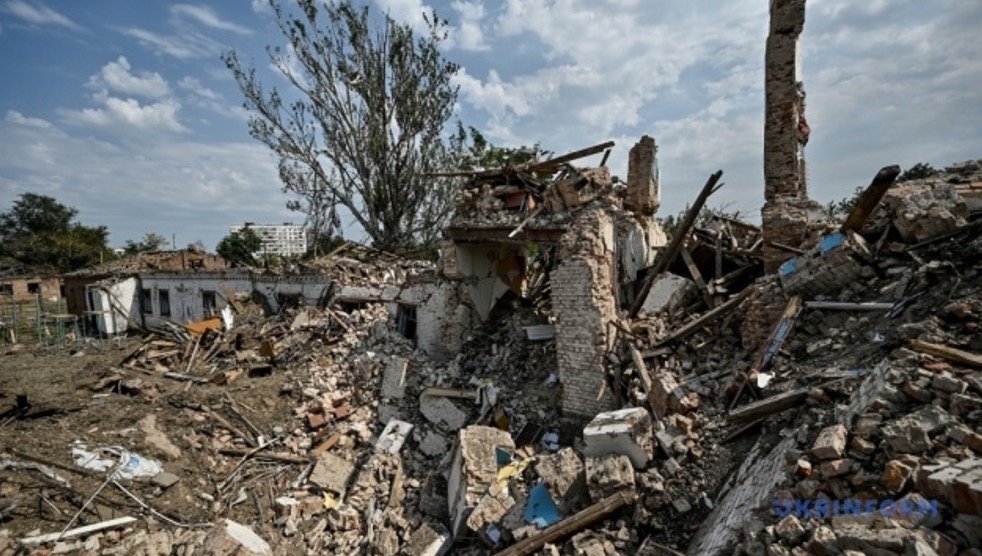
The destruction caused by war goes beyond what is readily visible to the eye.
1.
Introduction
by Barbara Taft
Most people tend to put the costs of war into convenient boxes: The cost of munitions; the death toll; …
2.
The military elephant in the climate room
by Nick Buxton
Two global news events have dominated the summer of 2026: the US-Israeli war on Iran and intense heatwaves in Europe and the eastern United States…
The military elephant in the climate room
by Nick Buxton
Two global news events have dominated the summer of 2026: the US-Israeli war on Iran and intense heatwaves in Europe and the eastern United States. They are rarely connected in news coverage, but the mother fearing for her family’s life under bombardment in Tehran is connected to the grandmother in a poor Parisian apartment block suffering at night from a heatwave with no way to cool herself, as well as the farmer in Sri Lanka unable to pay for the pesticides for their crops as a result of the closure of the strait of Hormuz. The thread that ties them together is a global fossil fuel economy that is deeply embedded in a war economy, which together are destabilising our planet’s climate.
The climate and military connections become immediately apparent if you look at the carbon emissions that resulted from just the first 14 days of the war on Iran. More than five million tonnes of greenhouse gas emissions were produced, which is higher than the total climate pollution of Iceland in 2024. These emissions result from the fuel used in combat operations, burning of fuel from bombed oil facilities and the greenhouse gas emissions that will result from rebuilding the decimated civilian infrastructure. [Bigger et al, Climate & Community Institute, March 2026] As we enter the fifth month of the war, the climate impact will have only worsened since this initial calculation.
Even outside active wars, the global military is a significant climate emitter, because of its dependence on fossil fuel. Jets, tanks, naval ships, missiles all use massive quantities of fuel, while the US military infrastructure made up of more than 800 bases worldwide requires fuel to sustain itself and connect its operations. Scientists for Global Responsibility (SGR) estimate that global militaries are responsible for 5.5% of global greenhouse gas emissions based on their infrastructure, operations and arms supply chains. [S. Parkinson et al, Estimating global military emissions, SGR 2022] If the world’s militaries were a country, they would have the fourth largest national carbon footprint in the world – greater than that of Russia.
US political scientist Professor Neta Crawford, who has carefully studied the Pentagon and climate change, traces how emissions have tracked alongside military spending and most of all military interventions, declining after the Cold War and rising again after 9/11 with the expansion of wars in Iraq and Afghanistan. She notes that the Department of Defense (DOD) remains the world’s single largest consumer of oil and as a result, one of the world’s top greenhouse gas emitters. [N.Crawford, Pentagon, Climate Change and War, MIT Press 2022]
Emissions are trending upwards as military spending increases. In 2025, global military spending increased to a record $2.9 trillion dollars, fuelled by NATO member countries’ commitment to increase spending to at least 3.5% of GDP. This has led to a surge in spending particularly in Europe (14% over previous year). If Trump secures a $1.5 trillion budget for the Pentagon (50% increase on an already excessive military budget), this would push spending and emissions to astronomical levels. The Transnational Institute (TNI) has calculated that NATO’s new spending goals alone would lead to a total military expenditure of US$13.4 trillion by 2030 and 2,330 MtCO2e of total carbon emissions, equivalent to the combined annual greenhouse gas emissions of Brazil and Japan. [TNI, NATO's 3.5% spending goal, 2025]
Yet despite their growing importance in contributing to climate change, military emissions remain largely hidden from public view. They are not required to be reported to the International Panel on Climate Change (IPCC), nor are countries mandated to reduce them in line with other climate commitments. This is deliberate and embedded in the multilateral system, as the US insisted on exempting the military from the first climate change negotiations in 1997 as a condition for signing them (which perversely the US Senate then failed to ratify). Although this deliberate military exemption was diluted at the Paris climate agreement in 2015, few countries report their full military emissions. A new SGR report shows that only 4 of 26 countries had near-term targets covering all core military emissions and only 2 with targets consistent with aim of net zero by around 2050. The biggest military spenders – US, China and Russia – have no targets to reduce military emissions at all. [S. Parkinson, Military climate strategies - are they just greenwash? 2026]
This failure is not just due to a natural tendency for military and national security sectors to avoid accountability and scrutiny, least of all to international bodies. It is also because the driving force behind any military emission reductions has not been a concern for the environment but for improved military effectiveness. As then US Navy Secretary Mabus put it in 2011, ‘Nobody’s ever accused the Marines of being tree huggers…. It is doing so primarily for one reason: it makes us better warfighters.’ [L. Daniel, 'Mabus: Energy Initiatives ‘Make Us Better Warfighters', war.gov 2011]The idea was to reduce the dangerous reliance on fuel, such as oil, particularly in combat situations where large fuel tankers or refineries (as we have witnessed in the US-Israeli war on Iran) were obvious targets for enemy fire. In a high-intensity warfighting scenario, for example, an army unit can consume around 800,000 litres of diesel per day to operate its land fleet – matching the fuel use of about 1000 cars over a whole year and requiring huge logistical challenges in ensuring fuel gets to where it is needed in every war.
This fuel dependency has led to searches for renewable energy sources for bases and operations. It has proved easy to put solar panels on a few military bases and to electrify some transportation, but it has been much harder to replace fuels for naval and aerial fleets or for certain vehicles like tanks. The use of so-called Sustainable Air Fuels (SAF) as an alternative to oil does not offer a solution as it is dependent on vegetable oil feedstocks, that can only be produced on sufficient scale by causing deforestation, water depletion and food insecurity, often in marginalised communities in low-income countries. Similarly, batteries on the scale required for tanks for example would require huge levels of mineral inputs that only add ever-increasing pressures for extraction for minerals. An all-electric military combat tank, for example with a 480-km range would need a 17 m3 lithium-ion battery that weighs 27 metric tonnes, 12 times heavier than a battery for an electric school bus [N. Edwards, The Military Green Transition, Political Geography 2026].
Meanwhile, military attempts to create a ‘digital’ battlefield to use algorithms to target enemies and expand wars – such as we have seen in the Gaza genocide – are dependent ultimately on increased computer server capacity and add even more energy and mineral demands on top of the existing AI boom. This increasing energy demand is in some places reviving coal and gas infrastructure that would have otherwise been shut down at a time when any further fossil fuel development threatens to push us past dangerous climate tipping points. It is also creating new environmental problems, such as unsustainable water extraction in drought-prone regions, in order to cool down data centres.
The answer therefore is not to ‘green’ the military – an impossible task and one that does not address the other costs of militarism - but rather to demilitarise and decarbonise our economies. The military after all is inextricably intertwined with oil and fossil fuel energy. One estimate is that between 25% and 50% of interstate wars since 1973 have been linked to oil interests. A close look at where overseas military bases and most wars are located reveals quickly that they are invariably close to oil and gas and mineral reserves. Oil-producing states are the biggest importers of arms, while oil firms have consistently used war to maximise profits and secure access to new markets. In that respect, the latest war on Iran is no different than many of its predecessors. As Professor Crawford argues, despite top US generals openly declaring their concern about climate change, ‘The DOD and national security elites appear to be fighting the last wars, with the doctrine much the same as it has been since the mid nineteenth century – what I describe as an oil consumption, militarization and conflict cycle’.
By contrast, disarmament will not only save many lives that would be lost in wars and genocides, reduce energy use and military greenhouse gas emissions, it can release resources for investment in climate transition and adaptation. Currently the world’s richest countries spend 52 times as much on their militaries as they do on climate finance. Just a 5% reduction in military spending would release $144 million dollars, enough to pay half of what the richest countries have committed to provide – and have yet to deliver - in climate finance for the poorest countries.
Conversely, investing in renewable energy rather than the military, particularly to support democratic energy systems based around principles of sufficiency rather than growth, has the potential to reduce conflict. It can remove reasons for war, build cooperation and collaboration, and disburse power away from elites. A paper by Stanley Center [H. Kinkoh, Renewable Energy as Peace Infrastructure, 2026] as related how this has concretely played out in communities in Nigeria, the Sahel, Sudan, South Sudan, Kenya, and the Democratic Republic of the Congo (DRC). It shows that decentralised renewable energy systems can function as peace infrastructure when designed with conflict sensitivity and governed with genuine community ownership. In South Sudan, for example, developing solar infrastructure not only provides critical energy for sustaining hospitals, schools and businesses, it also undermines the diesel economy which is controlled by armed militias.
These experiences provide a lesson for the world: to dismantle the war economy, we must dismantle the fossil fuel economy – and to dismantle the fossil fuel economy we will need to dismantle the war economy that props it up. Every investment in peace and climate action has the potential to reinforce each other. The lives of the millions of people worldwide affected by the war on Iran and the heatwaves could be immeasurably improved if we can end our dependence on fossil fuels and reduce our military spending and invest that in protecting those most vulnerable to climate change impacts. It means reclaiming the word security from the national security hawks and arms profiteers and returning to its basic principles of providing security and dignified life for everyone everywhere.
Nick Buxton coordinates climate and militarism research at the Transnational Institute (www.tni.org). He is co-editor of The Secure and the Dispossessed - How the military and corporations are seeking to shape a climate-changed world (Pluto Press, 2015) and founder and chief editor of TNI's flagship annual publication, State of Power, which has run since 2012. A dual US-UK citizen, he is currently based in California but has also lived for a number of years in UK, Bolivia, Pakistan and India. He is a fellow of the Transition Security Project, a global research initiative that analyses the US and UK military industrial complexes as economic, climate and geopolitical threats and proposes alternatives rooted in just transition.

1.
Introduction
by Barbara Taft
Most people tend to put the costs of war into convenient boxes: The cost of munitions; the death toll; …
2.
The military elephant in the climate room
by Nick Buxton
Two global news events have dominated the summer of 2026: the US-Israeli war on Iran and intense heatwaves in Europe and the eastern United States…